
When people talk about SEO, it’s easy to picture huge companies dominating the first page of Google. National brands with massive budgets tend to win the big, short search terms like “shoes,” “insurance,” or “dentist.” But small businesses and newer websites aren’t actually locked out of search results — they just have to approach keyword strategy differently. One of the most effective ways for a smaller site to compete is by focusing on long-tail keywords. These longer, more specific searches help level the playing field and give smaller sites a real shot at attracting high-intent traffic.
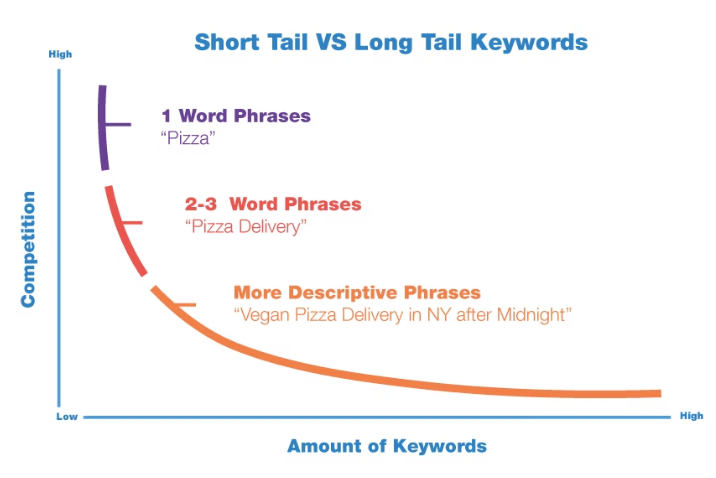
Long-tail keywords are search phrases usually made up of three or more words. Instead of something broad like “pizza,” a long-tail term would be “best late-night pizza in Dearborn” or “affordable vegan pizza delivery near me.” According to research from Ahrefs and SEMrush, over 70% of all Google searches fall into the long-tail category. People think of them as low-volume keywords, but collectively they represent the majority of what real users search for. These longer phrases signal exactly what someone is looking for, which typically means they’re closer to taking action — whether that’s making a purchase, booking a service, or visiting a business.
Big brands rarely optimize for long-tail keywords because they focus on high-volume terms that bring in broad audiences. That leaves thousands of niche openings for smaller websites. Since fewer sites target these phrases, competition is much lower. A small business with modest domain authority can realistically rank for long-tail keywords in weeks or months, whereas competing for broad keywords could take years, if it ever becomes possible at all. For example, a new dental clinic will never outrank national insurance companies or giant health comparison sites for the word “dentist.” But it can rank for “emergency walk-in dentist Dearborn open Saturday,” because that term is specific, local, and not owned by corporate giants.
Finding long-tail keywords doesn’t require expensive tools. Google’s own features reveal a lot about what people are searching for. The Autocomplete suggestions that appear as you type show real user queries. The People Also Ask section gives you question-based searches that are often long-tail in nature. Free tools like AnswerThePublic, Ubersuggest, and Google Keyword Planner also help uncover longer, more specific variations of a core topic. Many SEO professionals also recommend checking competitor blogs or FAQs — gaps in their content often point directly to long-tail opportunities.
Once you collect long-tail keywords, the next step is using them naturally in your content. They don’t need to be repeated awkwardly or stuffed into every sentence. Instead, they work best when used in page titles, subheadings, meta descriptions, and throughout helpful, conversational writing. Google’s algorithm is increasingly focused on intent and user satisfaction, so the quality of your explanation matters more than the exact match of every word. For example, if your long-tail keyword is “best running shoes for shin splints,” your article should actually explain why certain shoes reduce shin splint pain, what features matter, and how to choose the right pair. Helpful content is what makes Google trust your page enough to rank it.
Another strategy that works well is building topic clusters around a core theme. You can create a main page targeting a broad keyword, and then write supporting blog posts targeting related long-tail versions. This structure helps search engines understand that your site is authoritative on that subject. For instance, a local gym could have a main “Strength Training Guide” page and then supporting posts like “best strength training workouts for beginners,” “strength training routines for fat loss,” and “how to start strength training without equipment.” Each supporting post captures long-tail traffic and funnels authority back to the core page.
The biggest reason long-tail keywords work so well for small businesses is that they capture high-intent users. Someone searching “laptop” could be doing anything — comparing prices, browsing designs, or just researching. But someone searching “best lightweight laptop for college students under $700” already knows exactly what they want. These searches convert at a higher rate, which is why advertisers and marketers rely on them so heavily. A study by WordStream found that long-tail keywords often bring in more qualified traffic and convert 2–3 times better than generic keywords.
In the end, long-tail keywords give small websites a competitive advantage by letting them focus on specificity and relevance instead of sheer size or budget. They create opportunities to reach users who are ready to take action and who value precise, helpful information. Big brands dominate broad keywords — but small businesses can dominate the specific ones that matter most. That’s why long-tail keyword strategy isn’t just an SEO trick; it’s a practical path for standing out in a crowded digital landscape.
Leave a Reply